Standard
C 37 Rerunning searches :
Rerun or update searches for all relevant sources within 12 months before publication of the review or review update, and screen the results for potentially eligible studies.
Rationale and élaboration
Mandatory:
The published review should be as up to date as possible. The search must be rerun close to publication, if the initial search date is more than 12 months (preferably six months) from the intended publication date, and the results screened for potentially eligible studies. Ideally the studies should be incorporated fully in the review. If not, then the potentially eligible studies will need to be reported, at a minimum as a reference under ‘Studies awaiting classification’ (or ‘Ongoing studies’ if they have not yet completed).
Resources
See Handbook Section 4.4.10
mention explicite du délai localisée par Joëlle


When initiating searches, consider the possibility of future updates of the searches. Sometimes, search alerts or searches saved in the native databases may be set up at the same time as the initial searches are performed. This can save time in the long run and prevent unnecessary deduplication of search results or the elimination of duplicate information. A final search of the databases may also be needed if the length of time has elapsed between the start of your review and your preparation to write up the final paper, if search alerts have not been used or if changes need to be made to accommodate new vocabulary or relevant search terms. The JBI Evidence Synthesis journal will not accept systematic reviews where the search is older than 12 months from the date of submission, as stated in the JBI Evidence Synthesis Information for Authors.
Where possible, and especially for rapidly changing topics, 6 months is the ideal, although it is not required (Higgins et al. 2018). You may also wish to use this as an opportunity for refining your search again, not including search terms or databases that were not fruitful during the initial stages of your search, although any changes to the search should be explained within either the description of the search methods in the final review or in the appendix.
mention explicite du délai localisée par Joëlle
The Grey Matters resource is a free online tool for finding health-related grey literature that is not published commercially and may be inaccessible via bibliographic databases.
Sans PubMed, il est possible de savoir si une référence a été indexée par un humain ou une machine.
Pour cela, il faut consulter le XML de la référence à l’aide des APIs pour trouver l’attribut « IndexingMethod ». Par exemple avec le PMID 40794811 : https://eutils.ncbi.nlm.nih.gov/entrez/eutils/efetch.fcgi?db=pubmed&retmode=xml&id=40794811
L’absence de cet attribut ou une valeur « Manual » indique une indexation manuelle. Une valeur « Curated » indique une indexation initiale automatisée, qui a ensuite été contrôlée/vérifiée par un humain. Une valeur « Automated » indique une indexation automatique sans vérification par un humain.
(Informations fournies par Jérôme)
Libguide de la bibliothèque de la University of British Columbia sur la recherche de littérature grise
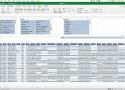
Vidéo, basée une autre vidéo, montrant comment créer une matrice de lecture dans Excel à partir d'une liste d'articles exportée depuis Scholarcy pour s'aider lors d'une revue de la littérature
Intéressant et probablement transposable aux exports provenant d'autres plateformes
The System for Information on Grey Literature in Europe used to give open access to 700.000 bibliographical references of grey literature (paper) produced in Europe and allowed to export records and locate the documents.
Examples of grey (gray) literature include technical or research reports, doctoral dissertations, some conference papers, some official publications, and other types of grey literature.
Aperçu, description et références de plusieurs types de review articles (critical review, literature review, rapid review, scoping review, systematic /meta-analysis review, umbrella review) mis à disposition par les bibliothèques de l'Université de Manitoba (Canada)
application web destiné à aider les chercheurs lorsqu'ils font une revue systématique de la littérature scientifique (systematic review)
développée au Qatar Computing Research Institute
présentation plus approfondie dans l'article publié par les auteurs en 2017
découvert à la lecture du Travail de Bachelor de Yann Odier :-)